
Schools Are Finding New Ways to Add Space Without Building New Facilities
Spend a day on almost any school campus and you'll notice something.
The buildings are working overtime. The football program is sharing storage with baseball. The soccer team has equipment tucked into every available corner. The band has trailers parked behind the stadium. Coaches are meeting wherever they can find an empty room. Concessions are squeezed into spaces that were never designed to serve hundreds of people on a Friday night. The challenge isn't unique to schools. Parks departments, youth sports organizations and community athletic complexes face many of the same issues.
Programs continue to grow. Facilities don't always grow with them. For many organizations, the answer isn't building an entirely new facility. It's finding a smarter way to add usable space where it's needed most.
Every Program Needs Space. Not Every Program Needs Another Building.
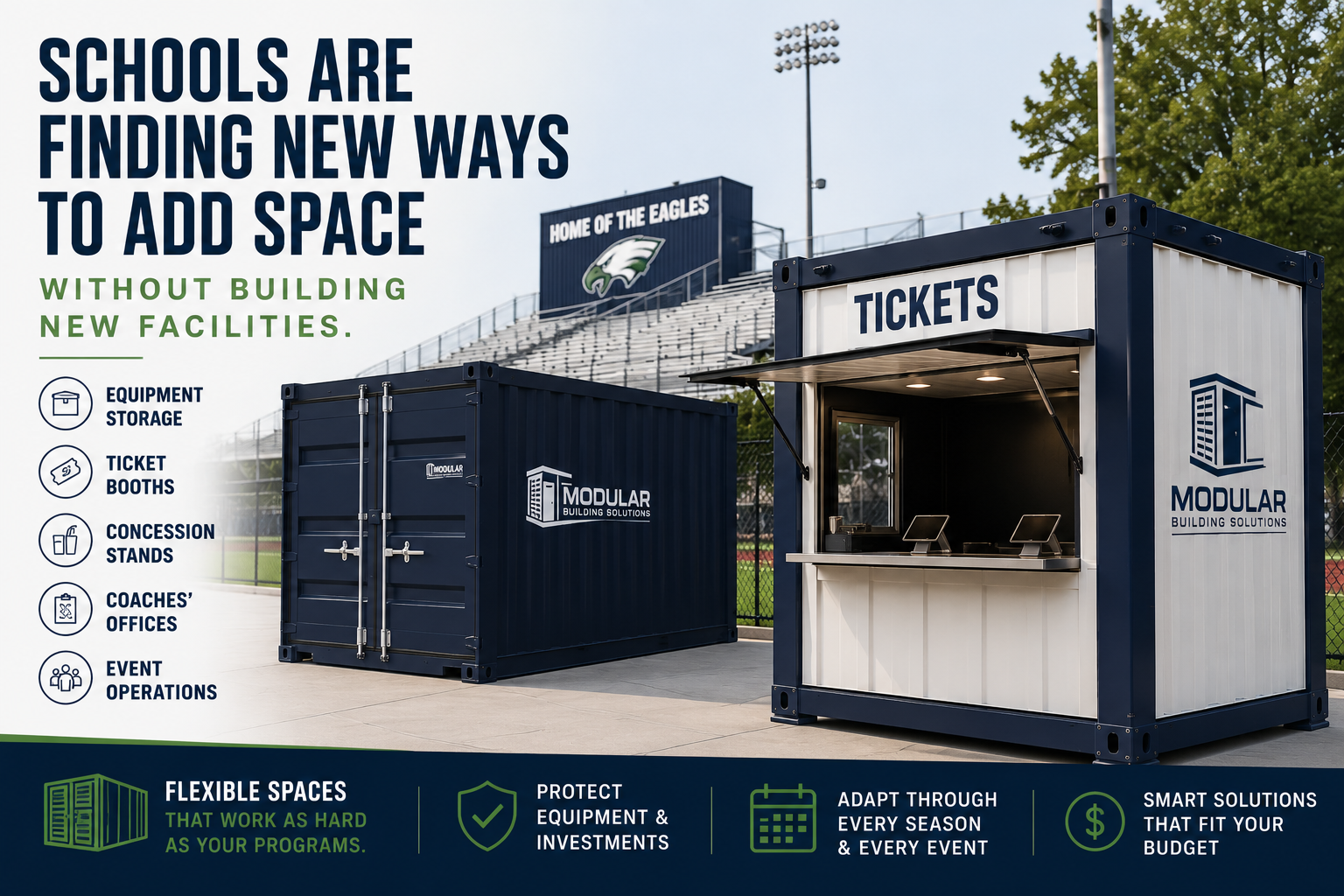
Athletic programs evolve constantly. A new girls' flag football team is added. The baseball program purchases new training equipment. The booster club raises enough money for better concessions. Youth soccer adds another age group. Track and field expands. Each improvement creates another need for space. The traditional answer has been to build. Sometimes that's exactly the right decision. Other times, organizations simply need a functional, secure space that can be added quickly without becoming a major construction project. Portable buildings have become an attractive option because they solve practical problems without requiring an entirely new facility.
Equipment Doesn't Stay Small for Long
Think about everything an athletic department manages today. Uniforms. Training equipment. Hydration stations. Medical supplies. Scoreboards. Timing equipment. Field maintenance tools. Golf carts. Tables. Chairs. Seasonal decorations. Concession inventory. It adds up quickly. When dedicated storage isn't available, equipment ends up wherever there's room. Maintenance buildings become crowded. Locker rooms become storage rooms. Hallways become overflow space. The result is frustration for coaches, maintenance staff and administrators alike. Adding secure storage gives programs room to stay organized while protecting the investments they've already made.
Friday Night Isn't the Only Time These Buildings Can Be Used
One of the biggest advantages of portable buildings is that they aren't limited to a single purpose. A concession building can support football season in the fall. The same building can serve baseball and softball in the spring. During the summer, it may become event headquarters for tournaments or community festivals. A ticket booth can welcome fans on game day and provide information during school events, fundraisers or seasonal celebrations. An equipment building can support multiple athletic programs throughout the year instead of serving just one team. The more ways a building can be used, the more value it creates for the organization.
Planning for Growth Looks Different Today
Most schools don't know exactly what their campus will look like ten years from now. Enrollment changes. Athletic programs expand. Facilities are renovated. Traffic patterns shift. New fields are added. Parking lots move. Portable buildings give administrators another option when planning for the future. Instead of committing every new need to permanent construction, they can create flexible spaces that continue serving the campus as programs evolve. That flexibility has become one of the reasons modular and relocatable buildings are increasingly being used by educational institutions and public organizations looking to expand usable space while minimizing disruption to existing operations. Industry research consistently highlights reduced installation time and the ability to adapt facilities over time as key advantages of off-site construction.
Good Facilities Support Great Programs
Athletic success isn't determined by buildings. It's determined by people. Coaches. Players. Volunteers. Parents. Administrators. The right facilities simply make their jobs easier. They protect equipment. Improve organization. Create better experiences for families. Support volunteers. Help programs operate more efficiently. Those improvements may seem small individually. Together, they create facilities that are easier to manage and more enjoyable to use.
Space Should Never Be the Reason a Program Stops Growing
Every school wants to provide students with great opportunities. Every parks department wants to serve its community well. Every youth sports organization wants room to grow. The question isn't whether more space will be needed. The question is how to create that space in a way that makes sense for the future. Portable buildings aren't replacing schools. They're helping schools make better use of the campuses they already have. Sometimes that's all it takes to support the next season, the next program or the next generation of athletes.