
Before You Build a Permanent Kiosk, Ask Yourself These 5 Questions
Walk through any fairgrounds, sports complex, downtown festival or community event and you'll notice something interesting. The buildings all look different, but they're solving the same problem.
Someone needs a place to serve food. Someone needs to sell tickets. Someone needs a secure place to work. Someone needs a small retail space. Someone needs somewhere to greet visitors, answer questions or check people in.
The challenge isn't deciding whether you need a building. The challenge is deciding what kind of building makes the most sense.
For years, the answer was simple. Build something permanent.
Today, many organizations are taking a different approach. Portable kiosks are giving business owners, schools, municipalities and event organizers another option—one that offers flexibility without sacrificing professionalism.
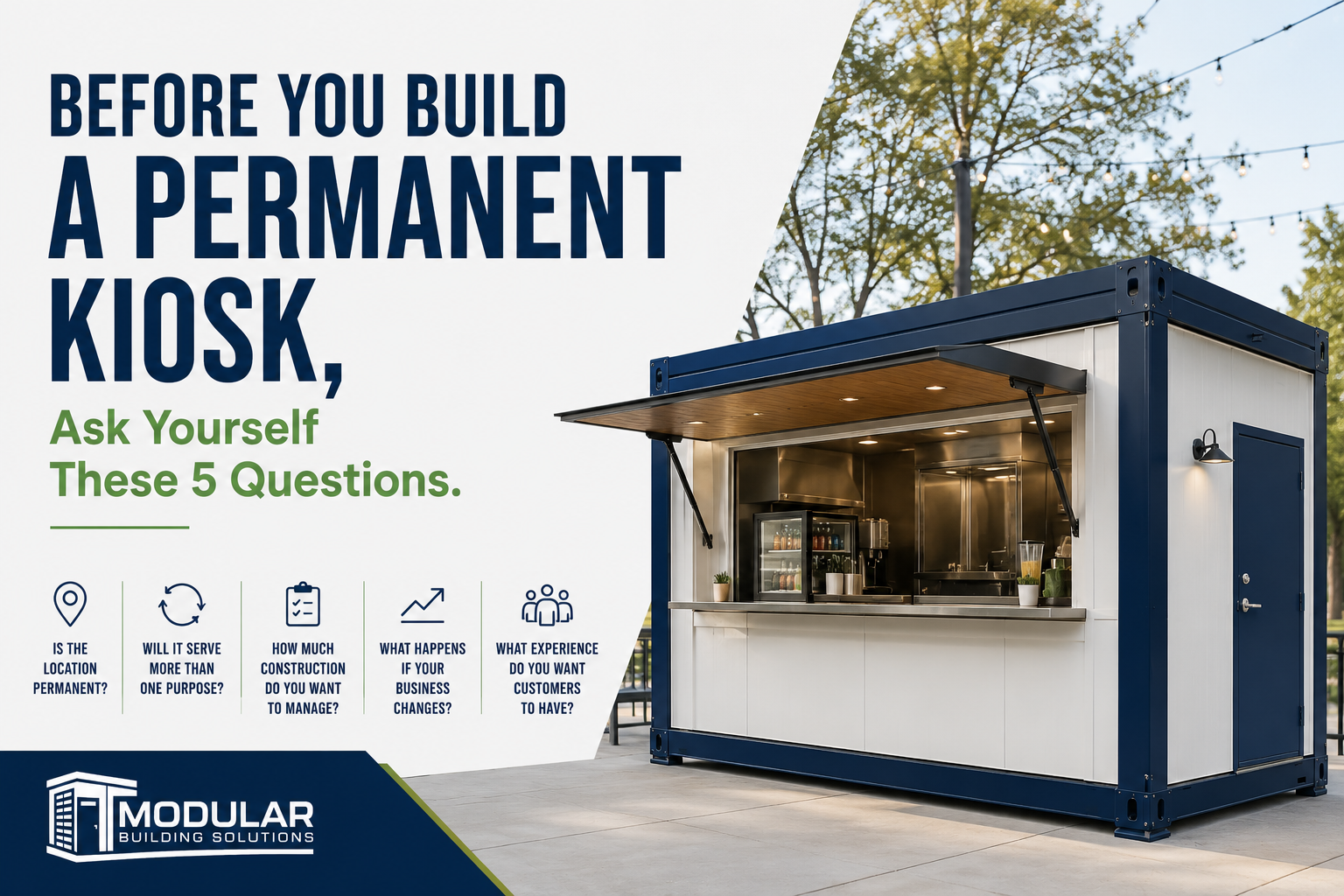
If you're considering a concession stand, ticket booth, pop-up restaurant or event kiosk, here are five questions worth asking before you break ground.
1. Is This Location Permanent?
This question sounds simple, but it's often overlooked. Maybe you're opening a coffee kiosk in front of your office building. Maybe your city is redesigning the downtown square over the next few years. Maybe your baseball complex plans to add another field. Maybe your event has outgrown its current layout.
The point is this: Locations change. Traffic patterns change. Businesses grow. Facilities expand. A permanent building assumes you'll always want that structure in the exact same location. A portable kiosk doesn't make that assumption. If your needs change next season—or five years from now—the building can move with you instead of becoming something you're forced to work around. That flexibility is one of the biggest reasons portable structures have become increasingly common for seasonal businesses, municipalities and recreational facilities.
2. Will This Building Have More Than One Job?
Think about how often buildings get locked into a single purpose. A concession stand serves food. A ticket booth sells tickets. A retail kiosk sells merchandise. That works well until your needs change. Many organizations are finding more value in buildings that can serve multiple purposes throughout the year. A concession building may become equipment storage during the winter. A ticket booth may serve as an information center during festivals. A retail kiosk may become a check-in station for community events. A portable building gives you options because it's designed to adapt as your organization evolves. Instead of asking, "What do I need this building to do today?" Ask, "What else might I want it to do over the next ten years?" That's a much different conversation.
3. How Much Construction Do You Really Want to Manage?
Building from the ground up involves far more than putting up walls.
Depending on the project, you may be coordinating site preparation, concrete work, electricians, plumbers, inspections, multiple contractors and construction schedules. That process makes perfect sense for many permanent buildings. It doesn't always make sense for a small concession stand, ticket booth or seasonal kiosk. Portable buildings simplify much of that process because the structure itself is manufactured before it ever reaches your property. Site work can often happen alongside production instead of waiting for one phase to finish before another begins.The result is less disruption, fewer moving parts and, in many cases, a much faster path to opening day. Industry organizations continue to identify reduced construction schedules as one of the primary advantages of modular and off-site construction.
For organizations working toward a seasonal opening date, those time savings can make a significant difference.
4. What Happens If Your Business Changes?
Businesses evolve. Events grow. Programs expand. Sometimes they move in completely different directions than anyone expected. A local coffee stand may become a sandwich shop. A seasonal retail kiosk may become a year-round operation. A city may redesign its event space. A youth sports organization may add new fields and relocate concessions. None of those changes are unusual. The question is whether your building can adapt with them. Portable kiosks create opportunities that permanent construction often can't. If your operation needs to move, the building can move. If your layout changes, the building can change with it. If your organization discovers a better location, you're not leaving your investment behind. Flexibility isn't about avoiding commitment. It's about giving yourself room to make better decisions later.
5. What Experience Do You Want People to Have?
This question has nothing to do with construction.
It's about people. If customers are walking up to your concession stand, waiting in line for tickets or visiting your pop-up restaurant, the building becomes part of their experience. Clean design matters. Visibility matters. Accessibility matters. A welcoming space encourages people to stop. Good workflow helps employees work more efficiently. Thoughtful layouts improve customer service. Those details may seem small, but they influence how people experience your organization. A kiosk isn't just a place to conduct business. It's often the first impression someone has of your event, park, business or facility.
A Better Way to Think About the Decision
There's no single building that's right for every project. Permanent construction makes sense in many situations. Portable buildings make sense in many others. The goal isn't to replace traditional construction. The goal is to choose the solution that matches how you'll actually use the space. If you need flexibility...If your location may change...If your building may serve different purposes over time... If you want a faster path from planning to opening...A portable kiosk deserves a place in the conversation. Sometimes the smartest investment isn't the biggest building. It's the one that gives you the most options for whatever comes next.