
Is a FlatBox Right for You? Let's Compare the Options
Most people don't start their search looking for a FlatBox. They start with a problem. They need storage at a ballfield. A mobile office on a jobsite. A concession stand. A hunting stand. A ticket booth. A pop-up restaurant concept. A secure place to store equipment at the lake. Then they start looking at their options. A storage shed. A Conex container. A traditional portable building. A custom-built structure. A FlatBox. The question isn't whether a FlatBox is the right solution for everyone. It isn't. The better question is whether it's the right solution for your situation.
"I've Never Heard of a FlatBox Before."
That's probably the first concern we hear.
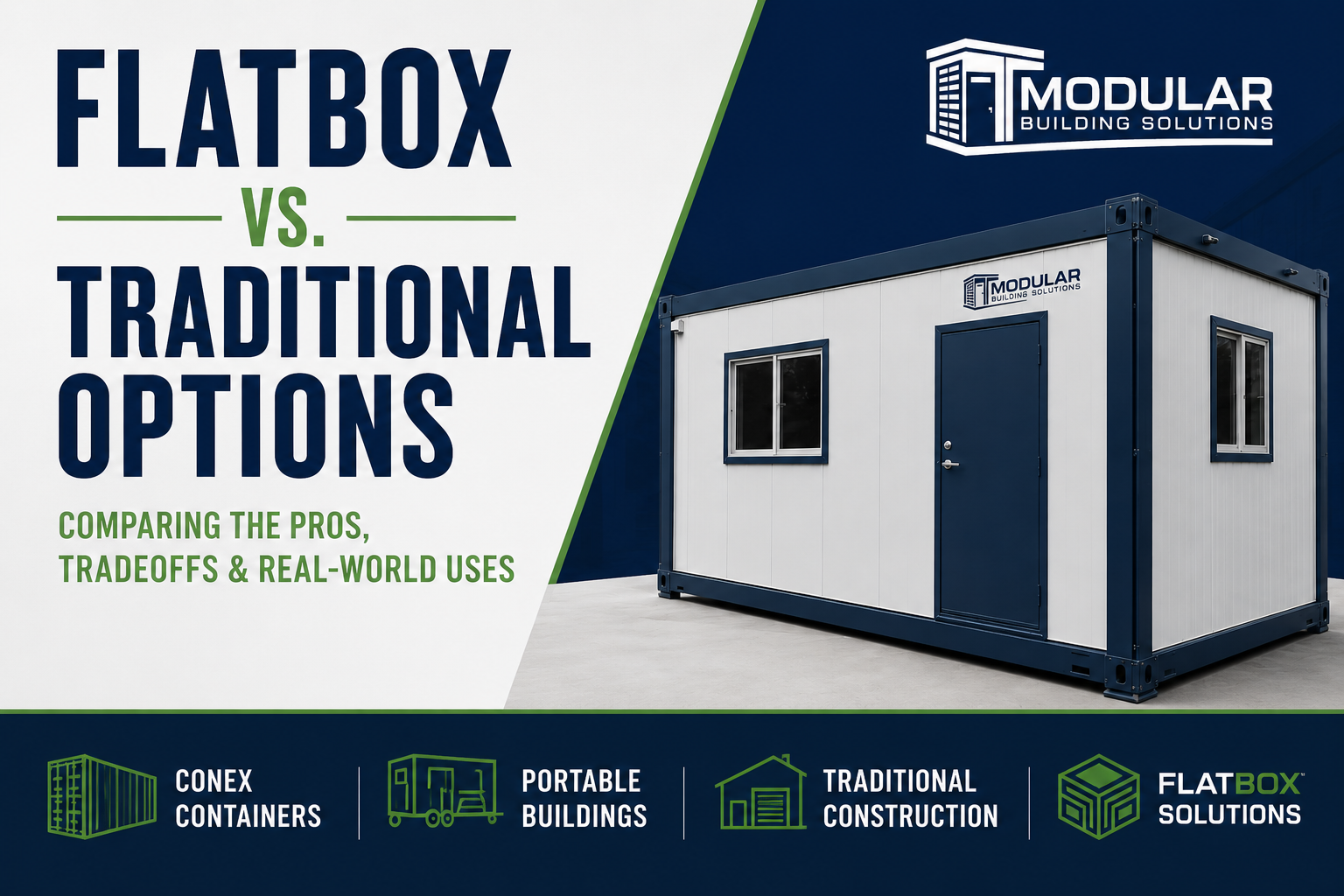
Flat-pack structures have been used around the world for years because they solve a simple logistics problem: moving empty space is expensive. Traditional portable buildings and shipping containers are moved as fully assembled units. Flat-pack systems are shipped compactly and assembled on-site, allowing multiple units to be transported in the same space required for a single pre-built structure. That transportation efficiency is one of the reasons flat-pack systems continue to gain popularity across commercial, recreational, and event applications.
The concept may be unfamiliar to some buyers, but the idea is straightforward: ship efficiently, assemble quickly, and create usable space where it's needed.
"Why Wouldn't I Just Buy a Conex Container?"
A Conex container is often the first alternative people consider. For pure storage, a Conex can be a great option. They're durable, secure, and readily available. The challenge is that they were originally designed to move freight. Many of the people we talk with aren't looking for cargo storage. They're looking for usable space. A concession stand needs serving windows. A ticket booth needs customer interaction.A hunting stand needs visibility. A mobile office needs a comfortable environment for people. A pop-up restaurant needs a layout that supports customers and operations. Those uses often require significant modifications to a traditional shipping container. A FlatBox starts with flexibility in mind and can be configured around the intended use rather than adapted after the fact. The choice often comes down to whether you need a steel box or a purpose-built space.
"Why Not Just Build Something?"
Sometimes that's exactly the right answer. If you're building a permanent facility that will never move and will serve the same purpose for decades, traditional construction may make sense. Many buyers aren't in that situation. A school may not know how athletic programs will grow. A parks department may need additional concessions today and storage tomorrow. A business owner may want to test a retail or food concept before signing a long-term lease. A contractor may need an office for the duration of a project and somewhere completely different next year. Flexibility becomes valuable when the future isn't perfectly predictable. Relocatable and modular structures have become increasingly popular because they allow organizations to adapt without starting over every time their needs change. Studies of modular and relocatable construction consistently point to faster deployment, reduced site disruption, and the ability to repurpose structures over time.
"Will It Hold Up?"
This is a fair question.
People are naturally skeptical of anything that assembles on-site. The reality is that modern flat-pack structures are engineered specifically for repeated assembly, transportation, and long-term use. They are designed to withstand transportation, weather exposure, and regular use in commercial environments. Many flat-pack systems are used on construction sites, industrial facilities, commercial properties, and recreational applications where durability is a requirement, not a luxury. No building solution is indestructible.
The important question is whether it's designed for the environment where it will be used.
"What If My Needs Change?"
This is often where a FlatBox begins to separate itself from traditional alternatives. A concession stand can become storage. A ticket booth can become an event operations center. A mobile office can move to the next project. A hunting stand can be relocated to a different area of the property. The ability to repurpose and relocate a structure creates options that permanent construction simply can't offer. That flexibility is one of the primary reasons relocatable and modular structures continue to be adopted across a wide range of industries.
The Better Question
A FlatBox isn't replacing every storage shed, every Conex container, or every permanent building. That's not the goal. The question isn't, "Is a FlatBox better?" The question is, "Which option fits the way you'll use the space?" For people who need flexibility, portability, and the ability to adapt over time, the answer is becoming easier every year.